What to see in Rota
A natural monument that exists nowhere else, and eight more places, all within the town's boundaries. The day is built around the tide.
A natural monument that exists nowhere else, and eight more places, all within the town's boundaries. The day is built around the tide.
You can fill a whole day without leaving the municipality: coast, pinewood, dunes and a monument that exists nowhere else.
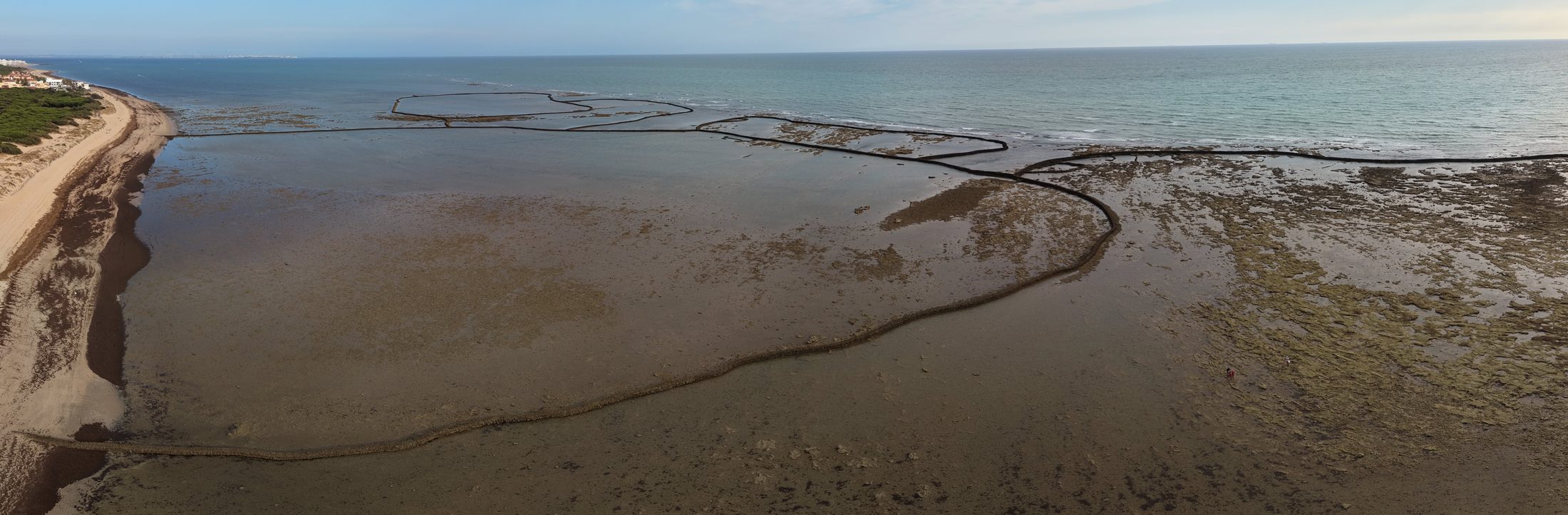
What sets Rota apart from any other town on the bay is its shoreline. When the sea pulls back the corrales appear: stone walls that have been fishing on their own for centuries and that you can walk along. They surface and are covered again twice a day, and the times shift daily, so it is worth checking a tide table before planning anything.
Everything else —the pinewood, the dunes, the greenway, the botanical garden, the beaches— is minutes away and does not depend on the sea. That gives the day its natural order: the shoreline first, when low tide falls; then everything else.
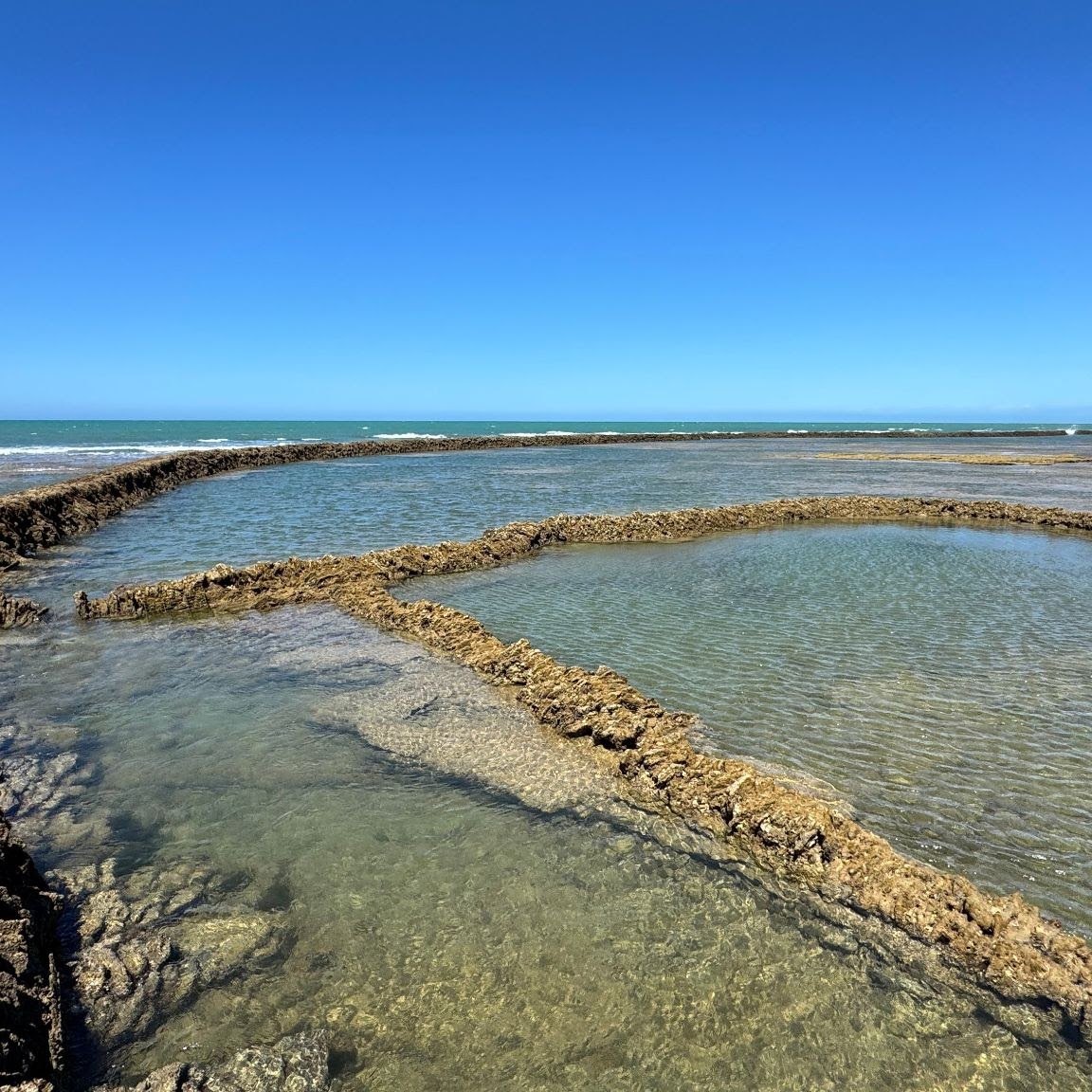
The first Natural Monument declared in Andalusia, in 2001. A way of fishing that is still alive here and is kept by hand, stone by stone.
There are five active traps, looked after by the association of corraleros. At high tide you cannot see them; as the water drops the walls emerge and the pools are left full of life.
Going down to the traps on your own costs nothing. Stepping inside the wall with a corralero is the guided visit.
The Natural MonumentNone of them is far: they fit into the same day or the next one. Each one leads to its own page, with what you need to know before you go.
Flamingos, spoonbills, waders and raptors a step from town.
The pine forest few visitors ever see.
The ridge of sand that shields the coast.
One of its last refuges on the Cádiz coast.
An old railway line, now a path for walking and cycling.
A little-known corner of Rota.
Plants from half the world, for the whole family.
Sand, pines and the fish traps surfacing at low tide.
The tide sets the order; everything else fits around it.
At low tide the water held between the stones fills with life. It is a protected area: look, and leave it as you found it.
The common chameleon lives in the pinewood and the dunes of Rota. Spotting one is hard, because it is camouflaged and is never disturbed, but the search fills an afternoon.
Plants from half the world in a small, flat enclosure, easy to walk slowly and with a pushchair.
Rota is not only coast and pinewood.
In the old town you will find the Castillo de Luna, the parish church of Nuestra Señora de la O, the Capilla de la Caridad and the covered market, all within walking distance along narrow whitewashed streets.
The association does not run any of these. Their opening times and tours are handled by Rota Town Council, and its tourist office is the place to confirm them before you go.
Yes. Walking down to the traps at low tide costs nothing and needs no booking. What carries a donation is the guided visit, where you step inside the wall with a corralero. It is a Natural Monument: look, and leave it as you found it.
The fish traps when low tide falls and, around them, the pinewood, the dunes, the greenway and the beaches. The botanical garden and Los Pozos del Galgo round off the afternoon if there is time. Everything is inside the municipality and minutes apart.
At low tide. The sea uncovers them and covers them again twice a day, and the times shift daily, so it is worth checking a tide table before you go.
It is led by the corraleros who maintain the walls, and it is conducted in Spanish only. A €5 donation per person, €2.50 for under-14s, going entirely to conserving the monument. Going down to the traps on your own costs nothing.